



I read, with amusement and horror, the account of a technology writer who installed enterprise-grade networking hardware in his house. Instead of using the WiFi hardware the cable guy delivered, or even buying up-leveled consumer-grade equipment like an Eero system, Lee Hutchinson selected the most difficult route to doing something most people don’t think twice about, if ever.
Hutchinson is actually running two impressive projects at once: The technical project of managing a home network the hard way, and the social project of living with other people while doing so.
The Devil is Lots of Details
How big a deal is it run a business network by yourself? Very. The stuff we use in our homes is networking with training wheels; the nuts and bolts are hidden. Enterprise-grade networking equipment exposes all of it. It’s hard to learn, time-consuming to manage, and when it breaks, it can do so in a spectacular fashion.

But when it works, it’s a beautiful thing. I am sure Hutchinson’s network is faster, more flexible, and far more secure than the milquetoast networks you and I have in our homes. And the fact that it requires endless tinkering is probably a bonus for a guy like him.
That is, until it breaks right before he and his wife sit down to watch a show on Hulu after a long day. It’s not the kind of network that you can fix by unplugging the router and plugging it back in again. Fixing this network might require a few hours and — I am not kidding — an advanced vocational degree. It’s a rigorous discipline.
The Social Experiment
The Hutchinson house network project has what is known as a low Spousal Approval Factor, or SAF. Nerds sometimes like to take on projects that are more fun and difficult than they are useful: Why buy a thing if you can build it yourself, after all? If we cohabitate with someone, we sometimes know in advance which of these experiments are going to get pushback.
Sometimes we need to think about this seriously before we begin a project.
Calculating the Spousal Approval Factor for a given technology project depends for the most part on your spouse’s and children’s tolerance for being inconvenienced, balanced by your own primal need to be alpha wolf to your technology. The SAF is also impacted by financial considerations, your family’s sense of humor and patience, and your skill as an educator.
A project can score a low SAF even if it isn’t super-nerdy. Some popular and easy-to-use products might have a low SAF not because they’re especially technical, but because they have an outsize impact on the lives of your cohabitants. Always-listening smart speakers like Amazon’s Alexa aren’t palatable for everyone. But you might be able to rebuild a 1968 Alfa Romeo in your garage and not even have to worry about the SAF: Nobody has to live with that in their living room.
So it’s worth considering SAF before you throw a tech project into your shared life. Here are some illustrative examples:
“Cutting the Cord”
SAF: High. This is the gateway drug to home tech projects.
In the old days, when you wanted to watch TV, you’d turn on the set, tune in a channel, and that was it. So easy. Too easy.
You can now bypass cable TV and get nearly all the video content you want over the Internet, using a combination of new-fangled tech hardware and online services. You will also save money, at least compared to cable. That in itself might be all that’s needed to get sign-off for this project.
The downside: Now when you want to watch a show, you have to fire up an app.
In truth, these apps keep getting better and some, like Netflix, are solidly mainstream. Netflix on an Apple TV has a high SAF.
If you want, though, you can make things more difficult, and run a media server on your home network to stream videos to your living room, that you’ve downloaded over something like BitTorrent, Usenet, or apps no one has heard of, like Sonarr and Sickbeard. Not that you should. But you can.
The Universal, Programmable Remote
SAF: It’s a Trap!
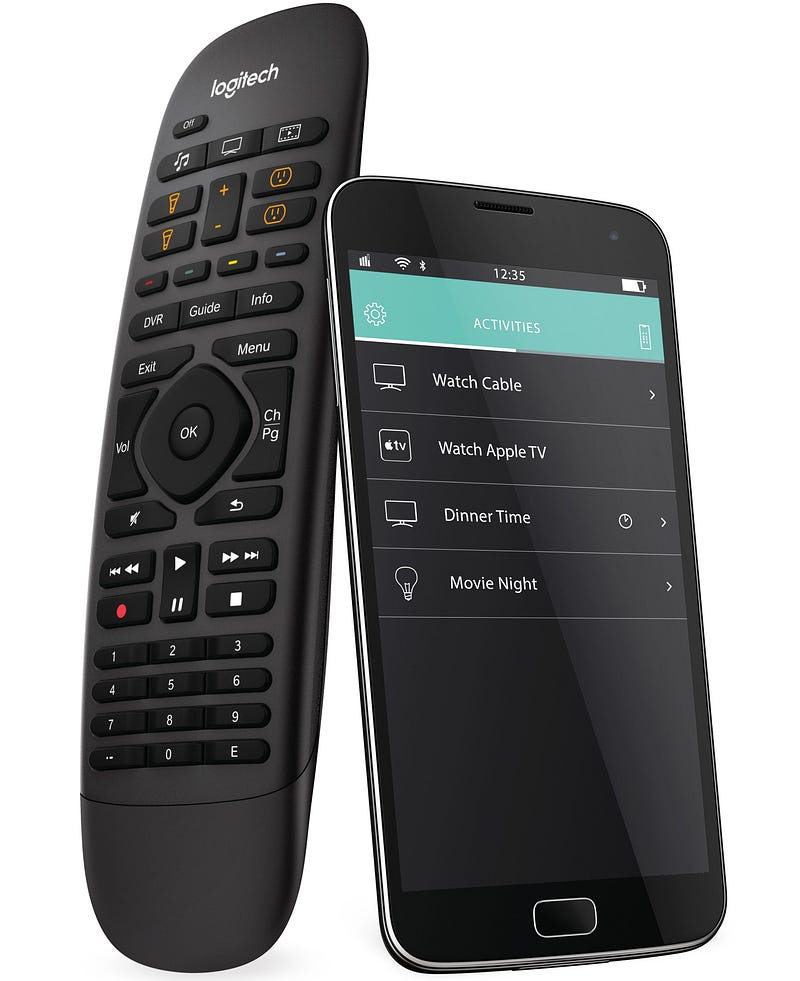
You’d think your spouse would throw a party in your honor for replacing a coffee table full of ugly, poorly-designed remotes with one sleek little number (recommendation: anything from Logitech that uses their Harmony Hub). Especially when you program it specifically for the gear you have in your house and your particular habits. You can have a button just for NCIS!
But the more you try to personalize the remote, the more fragile it is. The show will fall out of favor in your house, change networks, or you’ll get a new piece of equipment that requires extra manual button pushes to turn on. What your spouse learned about the remote will become increasingly wrong, and there will be frustrations, fights, and eventually someone’s going to sneak back to the old bowl of crappy remotes when you’re not looking. Good luck with this one.
“Smart” Lighting
SAF: 40-year-old virgin.
The problem with tech-forward, multi-colored, dimmable-by-iPhone lights is not what they do, it’s that they do it so nerdily. For the most part, you can’t just unscrew your old lightbulbs and screw in new ones: Your old light switches won’t control them, and if you turn off the light with the switch, then the phone-as-remote won’t work at all. That’s not something you want to fight about.
So you either put ugly and non-intuitive covers over your existing light switches and your house looks like your orthodox friends’ place on Saturday, or you replace the in-wall light switches with 21st-century versions. And now it’s a project involving even more money, circuit breakers, wires, and dust, and you’d better do it when your spouse is out of town.
Smart Speakers
SAF: You put what in the bedroom?
Alexa, Google Home, and Apple Home Speakers belong in the kitchen. They’re great for music, timers, and news. Yes, you can do a lot more with them. And yes, they’re designed to only record you after you intentionally wake them up. But once one of these things says, “Hmm, I didn’t get that,” during an adult activity, you’re in for trouble.
Pro tip: Don’t marry someone named Alex or Alexis.
Home-Built Computers
SAF Level: Now you’re Tech Support
Nerds know that off-the-shelf computers are a rip-off. You can do better by building just the computer you want with just the parts you need, and none of the crap software that the computer companies pre-load. A bit of research, a few hours putting pieces together, and you’ve got a nice, budget-appropriate machine.
The challenge here is that there’s no help line to call when it fritzes out. While each separate part may be under warranty, the assembled machine itself is your problem. You are the warranty. And you are going to get blamed for every little thing that goes wrong with the machine, even if it’s technically not your fault.
Technology Reveals Humanity
The most important calculation to make when embarking on an in-home tech project is to be honest with yourself about who you’re doing the project for. We nerds often tell ourselves that we’re only out to help someone else, when in fact the person we’re trying to help doesn’t want the “help” at all. Especially if it involves work on their part, like learning a new tool or un-learning a well-worn habit. We may relish the challenge, but they may not.
On the other hand, people aren’t robots. We indulge our family’s habits, and they indulge ours. Not every dinner we cook is perfect. Marry someone who understands this.